
WINDSOR CASTLE, Great Britain
The next five years were spent restoring the Castle to its former glory, resulting in the greatest historic building project to have been undertaken in this country in the twentieth century.
This work was divided into four phases. In the first phase, with the assistance of English Heritage, debris was cleared, and salvaged pieces sorted, dried and numbered. The building was also stabilised. In Phase 2 permanent roofing was placed over the Grand Reception Room and Chester Tower. Roofing was completed in Phase 3 and staff and service areas were reinstated. The restoration of the Great Kitchen was completed and a new kitchen service wing was constructed. The Duke of Edinburgh performed the 'topping out' ceremony to complete the roof on St George's Hall, which marked a key stage in the restoration process.
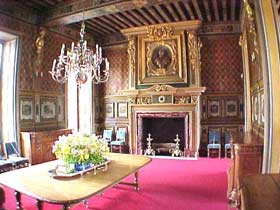
The final stage was the reinstatement of the nine principal rooms, a complex process managed by the Royal Household Property Section, reporting to The Queen and The Duke of Edinburgh. Five of the rooms were reinstated as they were before the fire to accommodate the rescued original furnishings and works of art. In the remaining principal areas, including the Private Chapel, the Lantern Lobby and the ceiling of St George's Hall, new designs were called for, enabling the best of twentieth-century architecture to contribute to the evolution of Windsor Castle. The process demonstrated that traditional British craftsmanship is still very much alive, and during the process several interesting archaeological finds came to light.
After five years' intensive work the restoration of Windsor Castle was completed six months ahead of schedule on 20 November 1997 at a cost of £37 million (US $59.2 million), £3 million below budget. Seventy per cent of the necessary revenue was raised from opening the Buckingham Palace State Rooms to visitors in August and September, and keeping open the Precincts of Windsor Castle throughout the year. The remaining 30 per cent of the cost was met by the annual Grant-in-Aid funding from Parliament for the maintenance and upkeep of the occupied Royal Palaces. The restoration was undertaken at no additional cost to the taxpayer.
 To mark the completion The Queen and The Duke of Edinburgh held a 'thank you' reception in the restored rooms on 14 November 1997 for 1,500 contractors, and on 20 November they celebrated their Golden Wedding Anniversary with a ball also held at Windsor Castle.
The most recent addition to the Castle is the new garden designed by Chelsea Gold Medallist Tom Stuart-Smith, which extends from the main gates to St. George's Gate on Castle Hill. Visitors now enter the Castle along the new pathway, which is edged with bold groupings of evergreen and deciduous shrubs over a carpet of herbaceous plants. A large shrubbery on the south side will be planted with a mixture of flowering shrubs and trees for interest throughout the seasons. For continuity with the historic landscape, the trees have been chosen to echo those already in the environs of the Castle and parks.

|






 contact